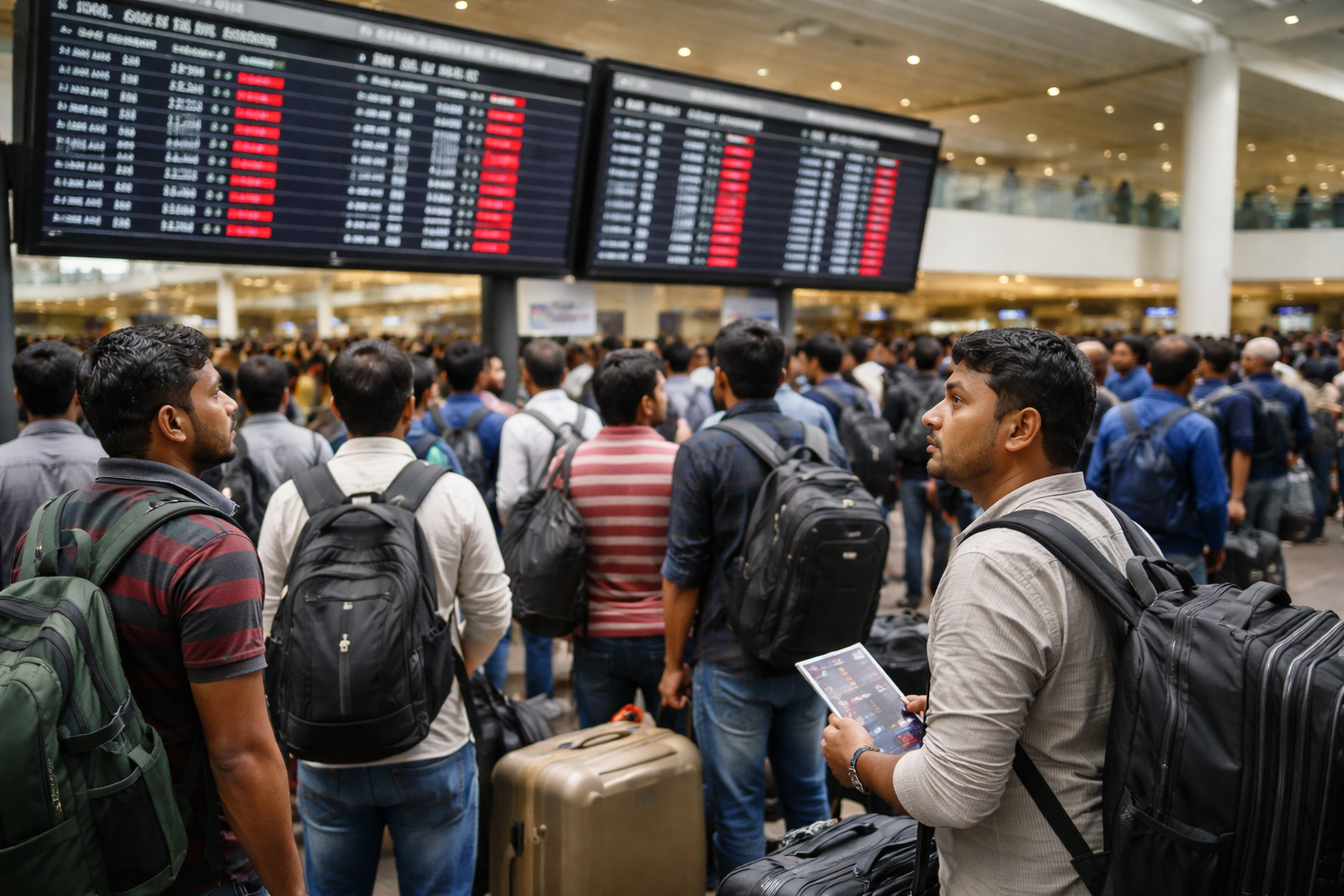
Airspace restrictions have led to cancellations, reroutings and temporary suspensions at major Middle East transit hubs.
Thousands of Indian expatriates are stranded in India or in transit and cannot return to Gulf workplaces.
Extended absences risk job termination for workers subject to strict reporting schedules.
Indian officials are coordinating with missions in affected regions to assist stranded citizens.
Summary
A sudden imposition of airspace restrictions across parts of the Middle East has disrupted flight operations to and from Gulf countries, preventing many Indian expatriates who travelled home temporarily from returning to their workplaces. The disruptions are linked to rising geopolitical tensions in the region and have produced widespread cancellations, rerouting and temporary suspensions at major transit hubs.
Impact on workers
The travel interruptions have significant employment implications for migrant workers. Many Gulf-employed individuals must adhere to strict reporting schedules; inability to return on time is increasing the risk of dismissal. For those who rely on overseas wages as their primary income, even a short delay can impose severe financial stress. Observers report that thousands of Indian expatriates are affected, either stranded in India, delayed in transit, or worried about instability in host countries.
Aviation disruptions
Airlines servicing the region have implemented cancellations, rerouting and temporary route suspensions as airspace access changes. Major transit hubs that normally facilitate rapid turnaround for international travel are experiencing unpredictable schedules, leaving passengers uncertain about onward connections and arrivals.
Government response
Indian officials are monitoring the situation closely and coordinating with diplomatic missions in affected Gulf countries. Authorities are exploring options to assist stranded citizens, provide consular support where needed and maintain communication with airlines and host governments. The evolving nature of the restrictions, however, complicates response planning and relief operations.
Wider implications
The episode underscores the vulnerability of migrant workers to disruptions in international travel infrastructure. Beyond immediate logistical challenges, the crisis highlights the dependence of livelihoods on stable travel and employment systems and the potential cascading effects of geopolitical instability on remittance-dependent households.